
Thermal Analysis
Make confident thermal design decisions before committing to prototypes. We provide solver-agnostic Thermal CFD consulting to help engineering teams predict temperatures, heat flux, pressure losses, and cooling effectiveness across products and industrial systems. From early concept screening to detailed design validation, we translate thermal physics into clear KPIs and practical recommendations that improve performance, reliability, and safety.
What CFD delivers
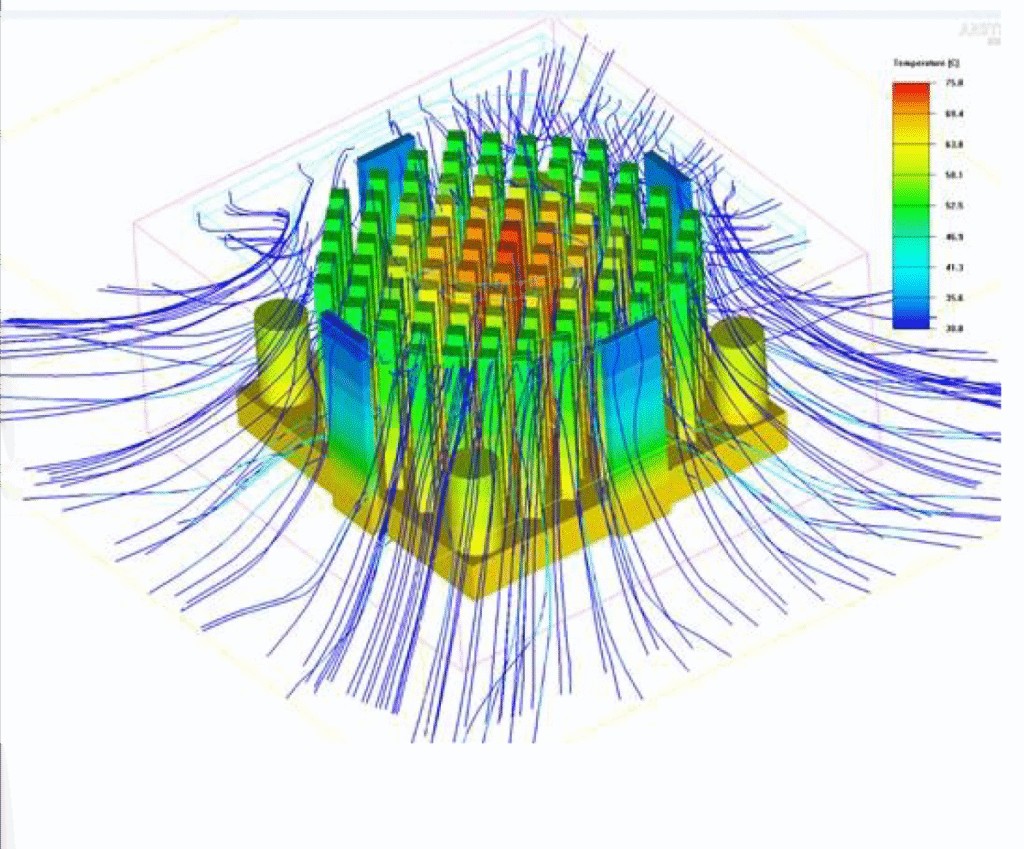
Conjugate Heat Transfer (CHT)
Coupled simulation of solid conduction + fluid convection (and radiation when needed) to accurately predict component temperatures, heat spreading, and cooling performance in real operating conditions.
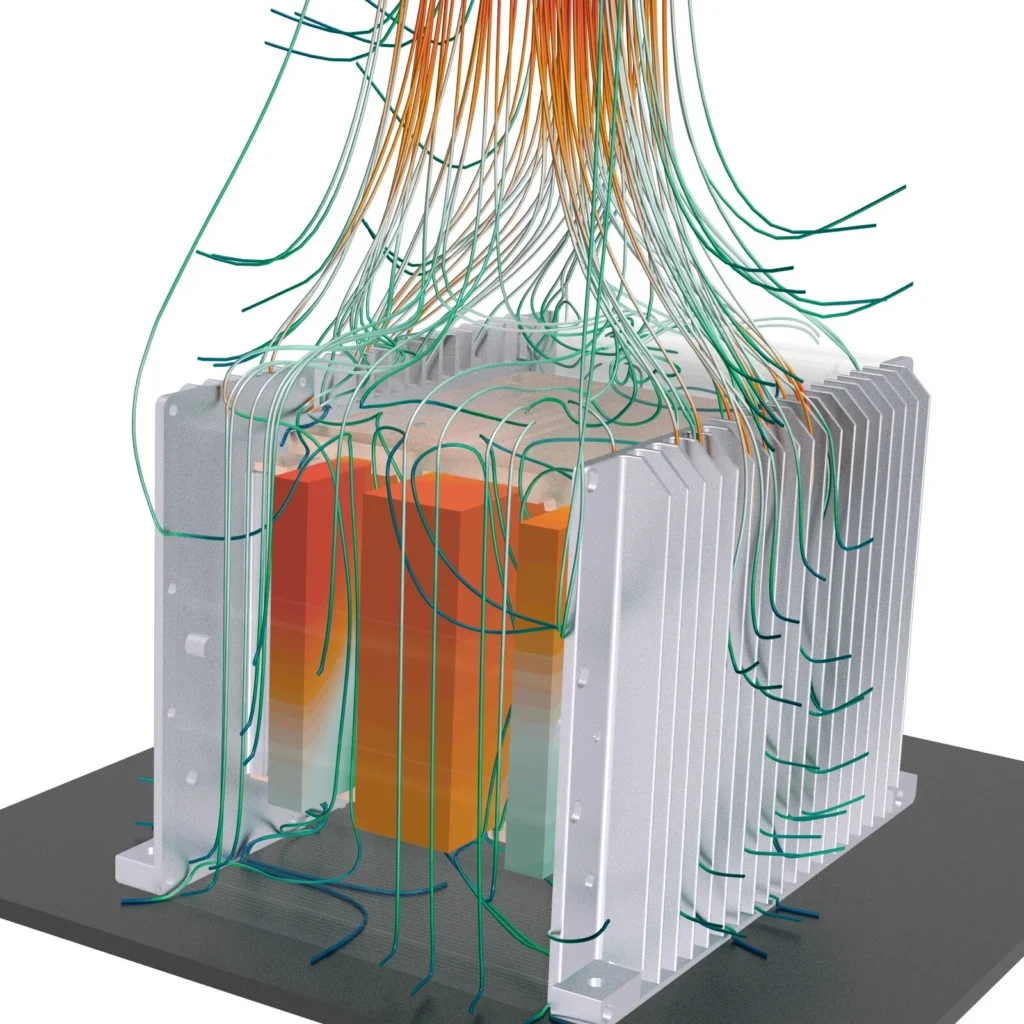
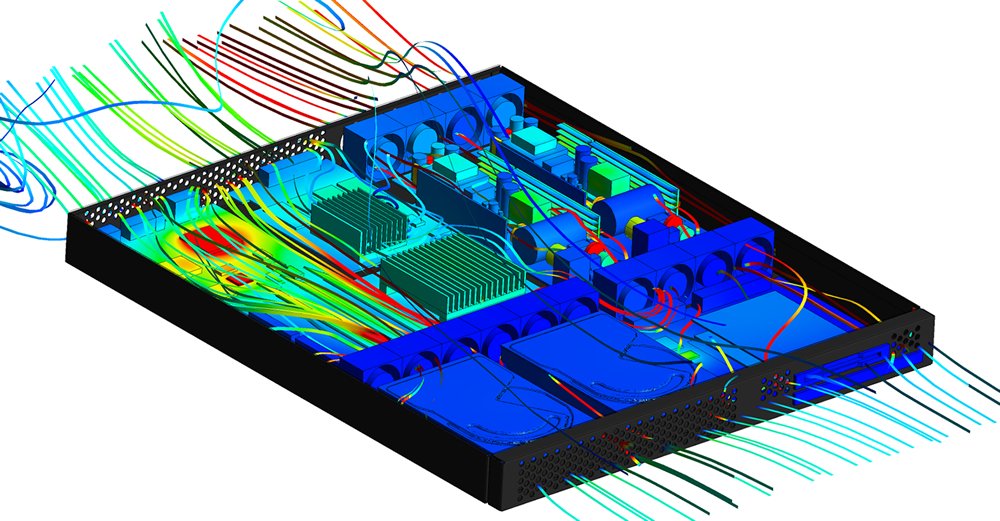
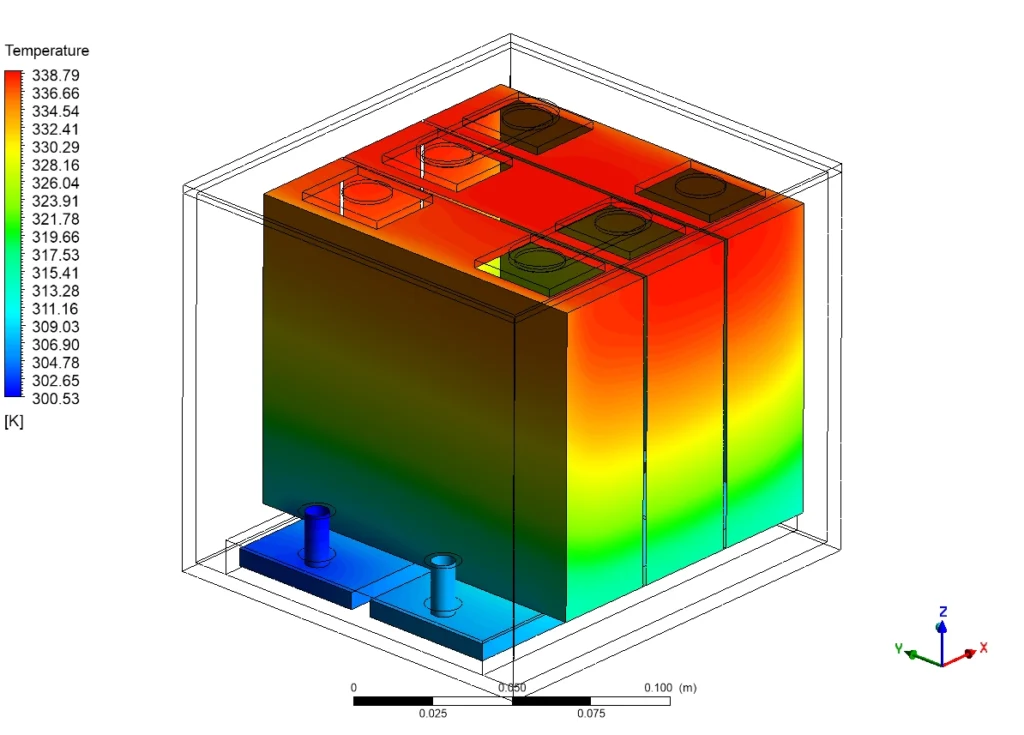
Electronics and power systems thermal management
Heat sinks and heat spreaders, PCB hotspots, enclosures, airflow distribution, liquid cooling (cold plates), power electronics and battery thermal uniformity, rack-level thermal compliance.
Heat exchangers and thermal equipment (compact models or detailed)
Flow distribution, pressure drop, effectiveness, maldistribution risk, and temperature non-uniformity. Use of porous/compact models for rapid iteration when geometry is complex.
HVAC, room comfort, and ventilation thermal behavior
Temperature stratification, supply/return performance, local comfort risk, and optimization of diffuser placement and setpoints.
Industrial thermal processes
Heating/cooling uniformity, thermal soak times, hot/cold spots, insulation effectiveness, and energy loss reduction.
Thermal safety and transient response
Warm-up/cool-down cycles, duty-cycle thermal response, time-to-threshold under abnormal conditions, and sensitivity to ambient or load fluctuations.
CFD Outputs:
Temperature fields:
Tmax , ΔT, thermal uniformity indices, margins to specification
Heat flux and heat transfer coefficients (HTC):
local and area-averaged metrics for critical surfaces
Cooling effectiveness:
flow distribution, bypass/recirculation, and thermal resistance breakdown (where applicable)
Pressure drop (ΔP):
budgets across ducts, filters, heat exchangers, or cold plates
Transient thermal response:
temperature vs time, time-to-limit, and recovery after load changes
Design trade comparisons:
configuration ranking with quantified impact on KPIs
Deliverables:
Presentation-ready 3D contours/sections (temperature, velocity, pressure, heat flux)
KPI tables (Tmax /ΔT, ΔP, flow split, thermal margins) and scenario comparisons
Clear recommendations: geometry updates, cooling path improvements, material/interface changes, setpoint guidance
Optional validation plan: thermocouples/IR mapping, airflow testing, and correlation strategy
Let’s discuss:
If you share your geometry (CAD), heat loads or operating conditions, and target limits, we can quickly scope a Thermal CFD study and deliver actionable results aligned to your design milestones.