
Electronics Cooling
Design electronics that run cooler, last longer, and meet performance targets with CFD-driven thermal insight. We provide solver-agnostic Computational Fluid Dynamics (CFD) consulting for electronics cooling—helping product teams predict temperatures, airflow distribution, pressure drops, and cooling effectiveness before building multiple prototypes. Whether you are optimizing a heat sink, tuning fan selection, validating an enclosure, or troubleshooting field failures, we translate thermal-fluid physics into practical design actions and clear deliverables.
What CFD predicts for electronics cooling
CFD delivers decision-ready outputs that directly support design choices:
Heat transfer metrics:
surface heat flux and HTC maps on critical components
Fan performance:
system operating point (ΔP–Q intersection), sensitivity to restrictions and clogging
Transient response:
warm-up, duty-cycle temperature histories, and recovery after load changes (when required)
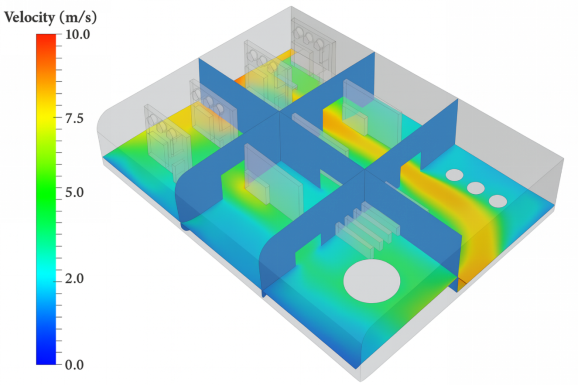
Enclosure Velocity Contour
Heat transfer metrics:
surface heat flux and HTC maps on critical components
Fan performance:
system operating point (ΔP–Q intersection), sensitivity to restrictions and clogging
Transient response:
warm-up, duty-cycle temperature histories, and recovery after load changes (when required)
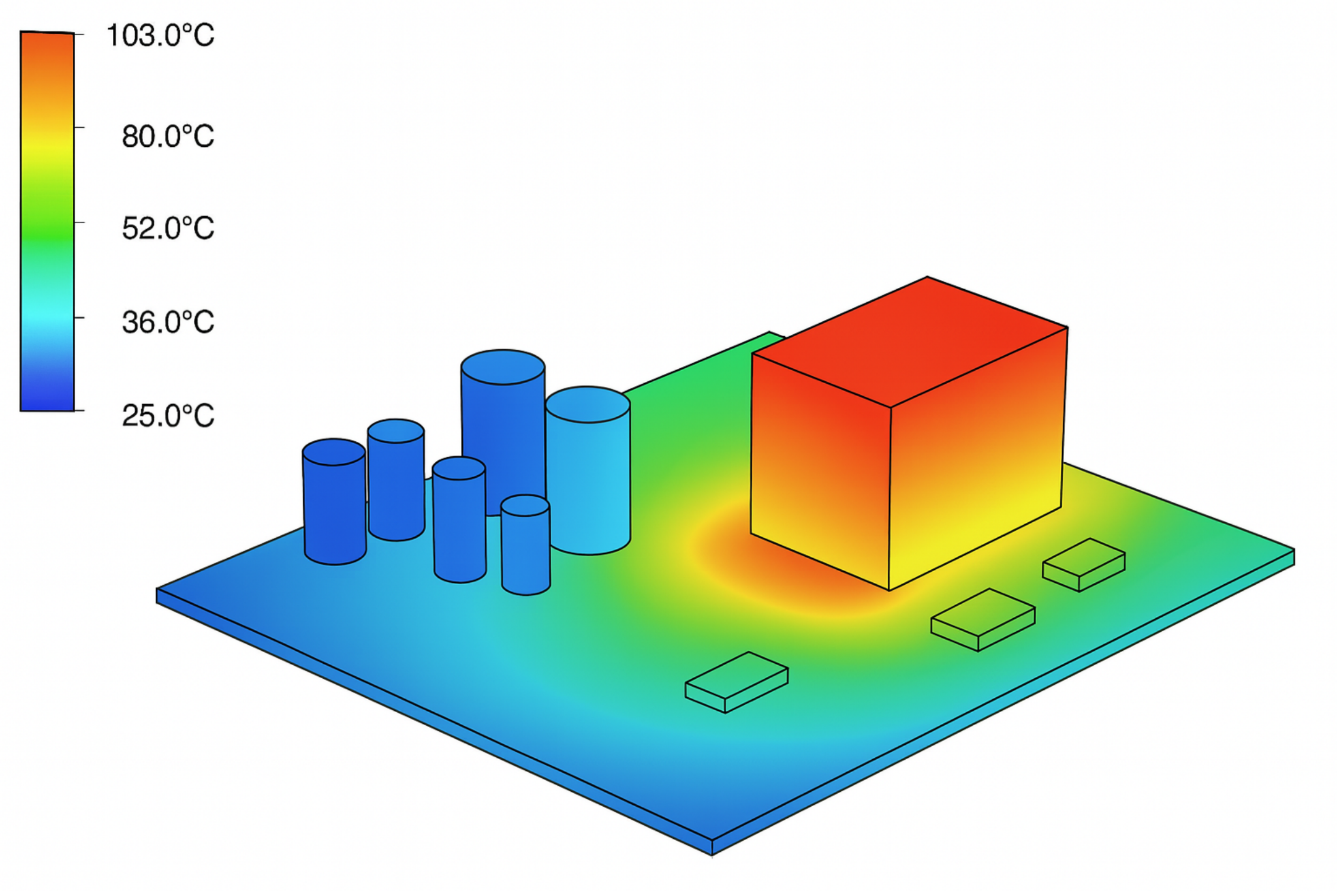
PCB Temperature Contour
Deliverables:
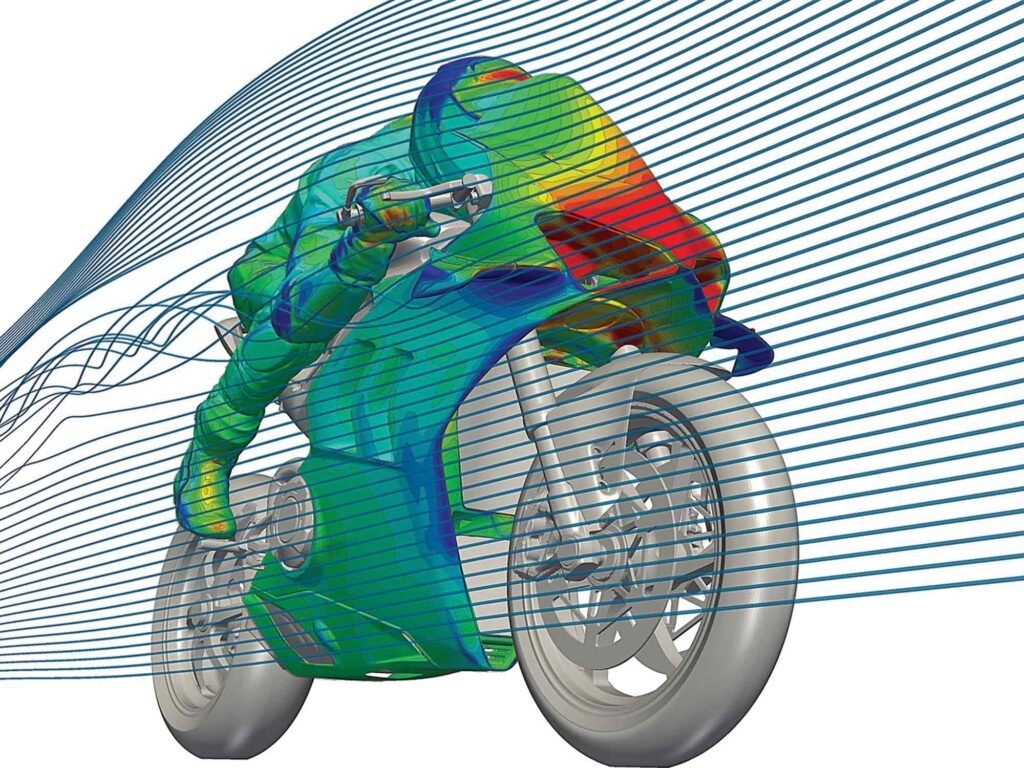
Presentation-ready 3D contour plots and labeled visuals (temperature, velocity, pressure, hotspots)
KPI tables (Tmax/ΔT, ΔP budgets, flow splits, margins to spec) and design trade comparisons
Clear recommendations for geometry, fan selection, ducting/baffles, vent/filter sizing, and operating conditions
Let’s discuss:
If you have CAD, a power map (or estimates), and target limits, we can quickly define a scoped CFD study and deliver design-ready results that reduce prototype cycles and de-risk thermal performance.